Friday, January 13, 2017

A Culture of Disrespect?


 The Collapse of Parenting by Leonard Sax, M.D. is both sobering and alarming. He makes a good case for why:
1)    So many have an extended adolescence
2)    The USA has dropped to #17 in the creative and productive sectors, behind many other nations
3)    We have so many college drop-outs (fewer and fewer of our kids are graduating from college)
4)    More kids than ever before are on medication
5)    There is an epidemic of childhood and teenage obesity in the US
6)    Our kids are more fragile now than they ever have been before.
The author is very thorough in his research, based on years of extensive clinical practice and interviews with students and parents internationally. He has given parenting seminars and spoken to teachers as well in Australia and all over America. To every concern listed above, he notes that the rise in disrespect of parents has something to do with it. He chastises parents for allowing it to happen, and urges us to change our techniques. 
He does not preach; he encourages, guides, and helps parents to regain their rightful roles.
In the next blog I will write more about the solutions. Right now, I want to delineate the problem.
Why do so many kids have an extended adolescence? They care more about what their peers think than their parents do, Sax says, giving them a very shaky basis for their lives. Parents love them unconditionally, and with peers, everything is conditional and contingent. (p. 105) Yet the kids mistakenly are more concerned with what their peers think of them than their parents.
 “Oh well, they need peer relationship!”  we might respond. Yes, they do, but not to the extent that peers determine their sense of self worth and influence their values. That’s the parents’ job. It used to be that Robert Fulghum’s Everything I Needed to Know I Learned in Kindergarten was the norm. “Play fair/Don’t hit people/Put things back where you found them/ Clean up your own mess/ Say you’re sorry when you hurt somebody…” Basic self-control and manners were taught. Now, the Internet, video game, peers, and TV do not teach these things, and neither do the schools. The parents must, or students don’t learn them.
Why is there so much obesity in the US? It has to do with what the kids do and what they eat. 30 years ago, if a child didn’t eat his vegetables, he was excused from the table, with nothing more till the next meal. And they went outside and played. Now, too many parents are unwilling to fight with their kids; they just give them pizza and french fries. And they kids…you guessed it, go back to their I-pad after supper.
Why are so many kids on medication? Dr. Sax compared the rise in diagnosis of childhood bi-polar disorder and ADHD in the past 16 years with that in other countries. It’s phenomenal! Parents would much rather blame their child’s misbehavior on a brain problem and give them a pill, than take responsibility to work with them. Besides, lack of sleep mimics ADHD in symptoms. Almost every child is sleep deprived.
Now, lest you think I am an alarmist, jumping on a bandwagon, let me assure you that I am not. I see kids like this on a daily basis. Let me share some solutions to the problems.
1)    Teach character! Self-control, integrity, respect, and consideration for others must be our number 1 priority! We tried to teach that to our kids (we did an okay job), but I see too many parents abdicating their responsibility in this area. The schools, their peers, the Internet, video games, TV, and movies will NOT, I repeat will NOT teach these things.
2)    Work on a relationship with your kids. A weekly parent-child visit to a coffee shop; a walk together; family dinners; a family ride in the car; a family vacation (without their best friend) all provide the family bonding that is so crucial to growing up.
3)    Listen with empathy when they share things. But be firm in your boundaries and consequences. That’s a powerful combination: gentleness and firmness. The opposite (which we too often default to) is harshness by reacting, and anger. And then we give in.
I’ll write more in two weeks when I finish the book. Meanwhile, sit down and have a talk with your kids. If you’ve been too lenient (screens in the bedroom at night? An absolute no-no!), explain that you are not doing your job as parents. Yes they’ll object, perhaps violently. But persevere, be courageous. It’s worth it in the end…
P.S. If you want to read others who have a the same opinion of our parenting now, read http://www.huffingtonpost.com/rhonda-stephens/are-todays-parents-getting-a-raw-deal_b_9645450.html Really convincing and good.

Sunday, January 1, 2017

How to Make 2017 a Better Year

It's a New Year, and many are saying that 2016 was a bad one. I'd argue that it depends on your perspective.  How grateful was I in 2016? Starting a new year leads us to reflect: how contented can I be this year? Read on...

I spend a lot of time alone. The other day, seeing people walking and talking together, I was wishing I could have more friends. Then, one weekend, I was with friends practically non-stop. And I cried out “Help, I need some alone time!”

Contentment.  How elusive it is! Yet are there some secrets we can learn that will bring us to experience more of it? I told my granddaughter I knew the secret of happiness. I had her attention. It is: wanting what we have, not wanting what we can’t have.

How simple. Yet, how hard. The hardest commandment to keep is the last one: you shall not covet. Jealousy is part of our fallen nature, and it takes many forms. Comparing ourselves to someone else, and wishing for their gifts. Particularly lethal is wishing our spouse would be like him/her. Wanting more money, a certain car, house, or type of clothing. Aspiring to a ministry is ok, but where is the line between honestly hoping to do something great, and bitter jealousy or selfish ambition? We all can relate to some of these, perhaps all of them.

I’ve found that I need to be honest with myself when I’m jealous of someone else. Only then can I deal with it. Whether it’s a small thing like “I wish I had more friends,” or a big thing like “Why did Psychology Today call about our book, but never followed up on it?” (this happened with our book), I need to talk to myself directly. I can talk myself down from feeling discontented if I want to, if I am honest about it, really admitting I am jealous of someone else. If I want to. Perhaps I need some time to feel sorry for myself. But, the negative comments, the complaining that comes from a discontented soul…is that worth it?

There are three things that contribute to contentment.

1) Gratitude is part of the answer. We have so much to be thankful for! Think about if you lived in a war-torn country, or a developing nation. Then our “first world problems” wouldn’t seem so big! Or imagine if you were disabled somehow. The smallest thing would be a victory.

I often do this exercise with my clients. Imagine you are blind for a minute. Then list two things you are grateful you can see. The same for hearing: two things that give you pleasure to listen to. Imagine two things that you love to touch, two things you love to smell, and you love to taste. What a joy it is, listing 10 things they are grateful for! The smallest things we take for granted can be recognized as pleasures.

Our Intensive Outpatient Program uses gratitude to bring healing to its participants. Each person has to come up with three things they are thankful for every day - and they can’t be the same. One lady said that changes her attitude first thing in the morning, planning what she is going to say. Amazing.

2) The second part is Intentionality. The other day I was having one of those pity-parties. I let myself cry and feel sorry for myself for a while. But then I thought, “I spend the whole week, trying to get others to think positive thoughts, yet here I am, in the depths…” Just then I happened to look in the rearview mirror (I was driving). There was a man in the car behind me who reminded me of a dear friend, a pastor who was so kind and caring. I decided to think about him for a while, remembering words he had spoken, things he had done. Before I knew it, I was out of the dumps, thinking more rational and positive thoughts.

But it was intentionality that did it. If I hadn’t wanted to, I wouldn’t have been able to get out of the doldrums like that. The mind naturally goes to negative thoughts unless effort and intentionality are used.

3) The third tool that helps us achieve contentment is perspective. How long do we have to put up with pain, sorrow, heartache? I’d like to quote John MacArthur in this one “A person’s ability to bear up under sorrow is directly related to his ability to focus on the eternal, rather than the temporal.” (Bible Commentary) The Bible says “For our light and momentary troubles are achieving for us an eternal glory far beyond comparison. So we fix our eyes not on what is seen, but on what is unseen…” (II Cor 4:17, 18a)

One client who was real depressed told me how to encourage her: “Just tell me that this too shall pass.” It sounds simple, but it requires us to dial in to a different paradigm. That all of this life is just temporary, a preparation for the next one.
 
In conclusion, if we focus on what we do have rather than what we don’t/can’t have; if we want to, we can CHOOSE to be content. Sometimes we need to play tricks on our minds to get them there, but we can. If we focus on the unseen rather than the seen we CAN be content!
Let’s choose to be less complain-y and more contented and grateful.
Doesn’t that sound like a better way to live? Let's do better at it in 2017!

Wednesday, December 21, 2016

Christmas Eating: Under Control!

“’Tis the Season” we hear and inside many of us cringe. Too busy, too much food, spending too much, what to give the person who has everything. Oh and did I say over-indulgence runs rampant? Over-extended, over-stressed, and then feeling guilty for not enjoying the season of Peace and Joy. Does that sound familiar? Now, be honest!
And lest you think I am a Scrooge, advocating cancelling Christmas, please read on. I’d like to suggest, we can enjoy it more fully if we simplify, pace ourselves, and scale back in several areas.
And especially eating. This blog will deal with that. It seems that every social event specializes in providing large amounts of rich food, and of course we feel obligated to try it all. It gets to the point where we don’t enjoy it any more, as the feeling of being perpetually full steals the joy of the good flavor. Not to mention the guilt we feel when our pants fit more snugly, and we rue the last 12 desserts we ate.
What strategies work to help us practice self control? Food is certainly meant to be enjoyed, and eating is one of the greatest pleasures afforded humankind! But in our land of plenty, we forget that there are other pleasures too.
Hedonism focuses on self and doesn’t take into account the focus on others, and the satisfaction that comes from saying “no.”
Practical strategies are the only kind I will even consider writing about.  On a day when you feast because it’s the company Christmas party, then do so with abandon! But the next day, limit your food intake. You really don’t need three big or even average meals on the next day. On the day your family celebrates Christmas with a grandiose table loaded with perhaps several meats and treats that you dream about all year long, go ahead and enjoy it! But the day before and the day after, eat significantly less. Your goal is to enjoy, right?  Well, you will enjoy it even more if you do this.
Another strategy that works is to eat more slowly. Think of the word savor. Teach our children to savor each bite (we can only do that if we learn to do it ourselves), rather than hurry. A small piece of pie can that way bring us much more satisfaction than a large one. Let yourself notice each aspect of various flavors and textures. Talk about them. Enjoyment will be heightened. (Of course, add to that the satisfaction of going home and not needing Tums.)
 The law of diminishing returns is always in effect. No matter how much pleasure we derive from things like good food and drink, it will take more to make us feel good. Unless we deny ourselves for a day or two. Then we return to thankfulness mode and appreciate every bite.
Hmmmm, doesn’t that sound appetizing?!


Wednesday, December 14, 2016

How to Defeat the Gimmes


How, in a culture gone mad with materialism, do we teach our kids that “it is more blessed to give than to receive?”   There is no time that is more important to remember and teach this to our children than during the Christmas season! 

An article in a Focus on the Family magazine that addressed that very topic impressed me.  The author reports watching in dismay as their children grabbed the gifts, opened them hastily and without expressing any thanks, greedily went on looking for more. Then the children complained when they didn’t get “as many” as a sibling, or everything they wanted.

Out of one child’s mouth came the very definition of entitlement: “Is that all there are…?” What could be more disheartening to a Christian parent?

When I was growing up my family instituted a practice that we have also used with our children.  On Christmas morning, (or whenever the gifts are opened), one person selects a gift from under the tree for any family member he or she chooses and gives it to them. Everyone watches as that person opens it, enjoying it with him or her. After the recipient has thanked the giver, he or she gets up and gives one gift to someone else in the family. And it goes on this way until all the gifts are opened.

Here are some of the results of this structured giving. The kids usually choose their own gifts to hand out first.  We hear comments like “I know you’re going to like this!”  which show that they are truly delighting in the giving (as per Acts 20:35). Each person enjoys being the center of attention while they are opening their gift, and everyone learns to share the joy of someone else receiving a nice present.

The focus becomes more on the people giving and receiving the gifts than the gift itself, truly an advantage in our society, which is inundated with “stuff.”  Sometimes the kids will say things like, “Oh, Dad hasn’t opened a present for a while, where’s one for him?”  It brings order to the otherwise free-for-all that occurs where there is no structure, and the kids seem to enjoy it more. 

All children need a balance of structure and nurture. And role models. It is up to us to model for them godly character: self-control, patience, love of giving, and unselfishness that are the hallmarks of our faith in Christ.

 Giving to charity, volunteering at homeless shelters, filling gifts boxes for the less fortunate, even dropping money in the Salvation Army kettles teach valuable lessons to those little eyes which are constantly watching.

What values will we pass on to the next generation?  May this be a season of truly honoring Him in our homes rather than succumbing to the dictates of our ever-darkening culture. 

Monday, November 28, 2016

A Different Perspective on Suicide


In my office, I see younger and younger kids depressed. It’s alarming. The problem? ENTITLEMENTITIS.
I read a book recently, which I marveled at, for it has the power to rescue kids from such a fate. The book is Raising Grateful Kids in an Entitled World. The title caught my eye on Amazon, so I ordered it, and read half of it the day I got it. https://www.amazon.com/Raising-Grateful-Kids-Entitled-World/dp/1496405293
WOW! Kristen Welch (the author) knows what she’s talking about. http://wearethatfamily.com/blog/
Listen to some quotes from the book: “[The American Dream is] bigger, more, newer is better. Everyone must have the newest gadget, and fun, fun, fun at all times. Happiness all the time is the goal for everyone.” (p. 6)
“When entitlement’s poison begins to infect our hearts, gratitude is the antidote.” (p. 154)
“Gratitude and happiness are so closely associated they are hard to distinguish from each other. ..Simply counting our blessings in a routine way works wonders.” (C. Carter, p. 155)
Or this one from Richard and Linda Eyre The Entitlement Trap:
“Kids grow up in a reality show world, thinking of themselves as the central characters on the stage. They have a Facebook page, they are famous in their own minds, they are like rock stars, and to them there is no room (and no need) for true emotional empathy, or self examination, or personal responsibility. Nor is there any incentive or motivation to learn to work. And they think they are entitled not to have limits or boundaries or discipline.” (p. 14)
What are kids going to do when they discover that they are not so important? That they are not the center of the universe? That life isn’t all about having fun? That they aren’t so special or exceptional that they can do anything that they want to …without much effort?
They might harm themselves. Or turn to substances to numb the pain. Or worse, kill themselves, thinking “If I can’t have what I want, life isn’t worth living…”
Suicide is the period at the end of a sentence that no one is listening to. It’s also a permanent solution for a temporary problem. And it’s starting to be a problem at a younger and younger age.
Suicide is the third highest killer of teens.*
You see, kids commit suicide when life doesn’t meet their expectations. And the expectations of today’s kids are out of sight!
What can we do, you ask? My suggestion is read the book! Follow the advice in it! We do have to the power to turn the tide of the entitlement that is poisoning our kids.
I want to scare you. I want to frighten you into changing how you parent. Into setting more limits on media and cell phones. Into intentional teaching of gratitude, through projects. A change in our own attitudes.
Kids need two things to grow up with hope:
1) They need to be able to handle disappointment well. (Do your kids?)
2) They need to have realistic expectations for life. (Do your kids?)
Gratitude is the answer to both of these. The book I am touting gives positive, concrete answers at the end of each chapter to parents looking for ways to teach their kids to be thankful. Remember, we have to TEACH thankfulness to kids, the default mode is self-centeredness, the “selfie.”
There isn’t time in this blog to address the social media and cell phone problem. Perhaps I’ll address that in another blog. But suffice it to say, that there is a marked increase in depression resulting from these things. I’ve seen it in the counseling room. I’ve even experienced it in my own life. How do we combat it, for those we love the most?
Some suggestions:    
            1) Have one day a week media free.
            2) Monitor texting and other conversations. An app that is helpful is www.TeenSafe.com
            3) Create a family mission statement and hang it on the wall. Then refer to it when making decisions about spending money and time priorities.
            4) Clean out closets & drawers, and urge your kids to give away not only what they don’t want anymore, but something they really love to share with someone else.
            5) Challenge them to compare themselves with those in poverty, not just the neighbor down the street.  Spend time with those less fortunate on monthly field trips to give them perspective.
            6) Let your kids be bored once in a while. It’s a healthy exercise to spark creativity.
            7) Resist the urge to tell your kids they are special. Instead say, “God made you unique, there’s no one else like you.”
            8) Create a chore routine. A “job jar” which contains written chores that the kids draw out is one way to do Saturday cleaning.
            9) Look for opportunities to serve outside your home: rake someone’s yard, make cookies for neighbors, clean up trash at the park. Visit a homeless shelter or a cancer ward together.
            10) Resist the urge to bail your child out, especially if it is a repeat offense like being forgetful or irresponsible. They won’t die if they don’t have lunch one day, but they’ll remember it from now on.
            11) Have a meal of rice and beans once or twice a month. It's, after all, how most of the world lives.
            12) Watch your mouth. Negative talk can influence how we think.** Hand out rubber bands, and every time you complain, snap it for 24 hours. This can show you how much you grumble, and encourage you to talk positively.
These are a few of the suggestions from Raising Grateful Kids in an Entitled World. The sub-title is How One Family Learned that Saying No Can Lead to Life’s Biggest Yes. We want our kids to say YES to life! How vital to teach them these things! Focus on character, in ourselves and our kids. It’ll be hard at first, but the end result will bring joy to everyone. Instead of sorrow…
Note: If you have a teen or a tween that is suicidal, I urge you to get professional help. But be ready to change. In my 35 years of working with kids, it’s when the parents change that I’ve seen the greatest progress in the kids.


Monday, November 14, 2016

Kindness:12 Kids' Books for Any Age


Kindness: how do we teach it? After this election, leaving the country so divided, we need to be intentional about setting the bar high. Kindness has never been more needed.

My husband wrote these words the day after the election:
“Neither the President nor the Congress can force anyone to hate. Cannot force anyone to be a bigot. Or a racist.... Or a rapist.
No government can force us to destroy another person.
We make those choices ourselves.
We can choose to love. That will never be illegal.
We can choose to be kind. There can be no laws against kindness.
We can be joyful, peaceful, patient, and faithful regardless of what party is in power.
Let us put aside the bitterness stirred up during this election. Let us be the people who can truly govern ourselves. Let us demonstrate what we want ALL of our leaders to be.
Because ultimately, our leaders are a reflection of who we really are. If we hate, then our leaders will lead our hate. If we seek to demean and insult others, our leaders actually follow our lead.
Let us show both parties that we do not want a country where we tear each other down in order for ourselves to rise. Let us stand firm for mercy, justice, and peaceful living.
That, more than anything a government can do, will actually change this country.”
So, I have a list here of 12 books that we can read our kids (or just read ourselves, for the kid in each of us). Enjoy…
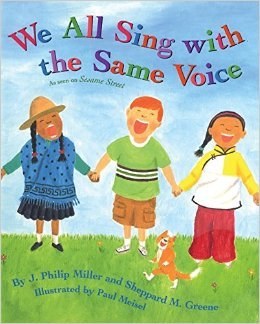
1. We All Sing With The Same Voice by J. Philip Miller and Sheppard M. Greene
View this image › What It’s About: This is a song book that connects kids around the world. The verses highlight differences between kids, illustrated on the pages of the book. The chorus brings all of these kids with many differences together, singing “We all sing with the same voice. The same song. The same voice. We all sing with the same voice and we sing in harmony.”
Why It’s Important: Not only will the music engage kids as young as three, but it also encourages global awareness and connection at a young age. Everyone is different and unique, and this book celebrates those differences while singing together as friends.
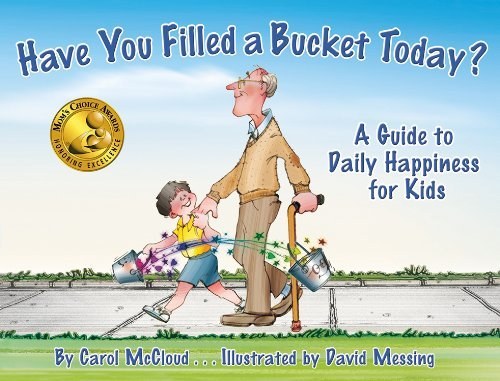
2. Have You Filled A Bucket Today? A Guide To Daily Happiness For Kids by Carol McCloud
View this image › What It’s About: This book introduces an idea that everyone has an “invisible bucket.” These buckets are used to hold your good thoughts and feelings about yourself. When you do something kind, you help fill someone else’s bucket.
Why It’s Important: This provides kids with a visual representation of the importance of kindness. It focuses on social interactions and how our actions positively or negatively affect other people. This book would be especially beneficial as kids begin to develop empathy towards others.
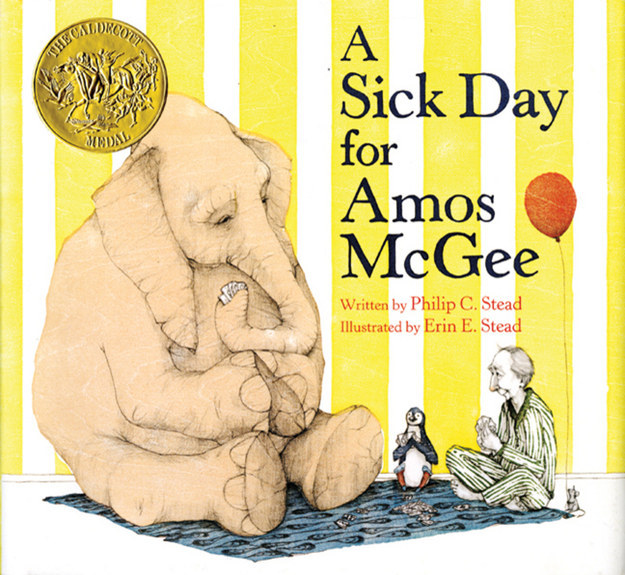
3. A Sick Day For Amos McGee by Philip C. Stead and Erin E. Stead
View this image › What It’s About: This story is about a zookeeper who is great friends with all of the animals and takes the time out of his day to do what they like with them. One day, he is too sick to go to work and the animals decide to come and visit him.
Why It’s Important: This sweet story shows how kind actions towards others are repaid. The animals all take care of Amos when he needs a friend, which shows children how important continual kindness towards others is.
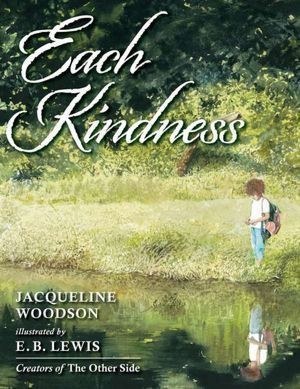
4. Each Kindness by Jacqueline Woodson
View this image › What It’s About: This story is about a new girl at school, named Maya and how Chloe, who has gone to the school for a while, reacts when she arrives. Chloe is not welcoming towards Maya, and excludes her from the group games. Maya leaves and Chloe is left feeling full of regret.
Why It’s Important: This story does not have the happy ending that so many books do, but teaches a critical lesson. Every choice we makes affects others in either a positive or negative way, and we do not always have an opportunity to fix our negative actions.
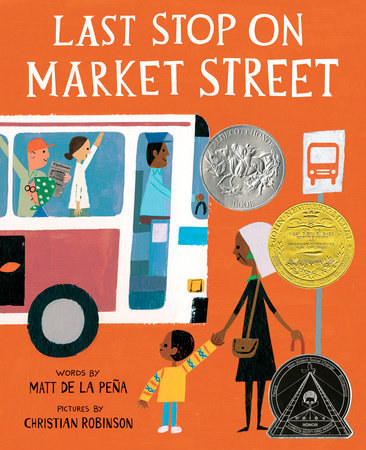
5. Last Stop On Market Street by Matt de la Pena
View this image › What It’s About: This 2016 winner of the Newbery Medal follows a young boy, CJ, and his grandmother on their way home one day. CJ spends most of the journey asking “How come…?” questions about everyone and everything. His grandmother answers each question with patience and eventually they leave the bus to volunteer at a soup kitchen.
Why It’s Important: CJ is asking seemingly simple questions throughout the book, but his grandmother’s responses always elicit empathy towards the other characters throughout the book. It serves as a reminder that everyone we encounter has skills and a story, but we must be kind and open-hearted in order to hear it.
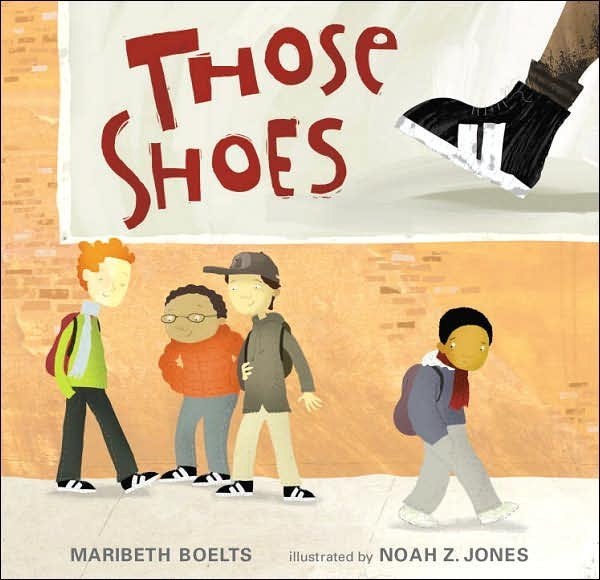
6. Those Shoes by Maribeth Boelts
View this image › What It’s About: In this book, we see a young boy dreaming about getting a pair of really cool shoes. Unfortunately, his family does not have the money for this dream to become a reality. He eventually finds the shoes in a thrift shop in near perfect condition and buys them even though they are too tight. Another kid in his class can’t afford new shoes either, and his feet would fit in the cool shoes when the narrator’s would not. So, the narrator decides to give his shoes away.
Why It’s Important: This book highlights the importance of giving and making difficult decisions. We see the narrator struggle to decide if he can really give his shoes away, but when he decides to, both he and the boy who receive his shoes end up happier than they were before.
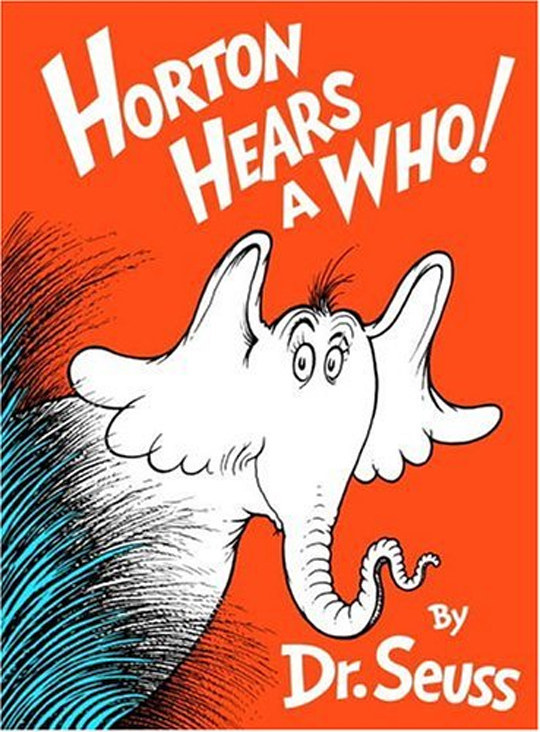
7. Horton Hears A Who by Dr. Seuss
View this image › What It’s About: A classic Dr. Seuss, this book is about an elephant who discovers an entire community living on a speck of dust. With his big ears, Horton is the only animal in the jungle who is able to hear the Whos. Despite being made fun of by the other animals, Horton stands by Whoville because he knows it is the right thing to do.
Why It’s Important: Not only is Horton doing the right thing, he is doing the right thing while everyone around him is bullying him to give up. This teaches an important lesson about standing by what you believe in, no matter what you face. With older children, you can also use this book to discuss the importance of advocating for those who do not have a voice
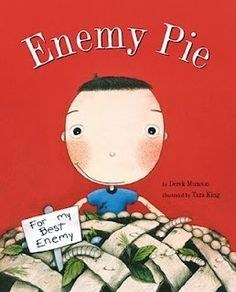
8. Enemy Pie by Derek Munson
View this image › What It’s About: This is about a boy who is having a great summer until Jeremy Ross moves in down the street. Jeremy excludes people from birthday parties and laughs when they strike out in baseball. The narrator’s father makes enemy pie to help defeat Jeremy Ross. In order for enemy pie to work, the boys have to play together all day. By the end of the day they are good friends and enjoy the pie together.
Why It’s Important: This tells a classic story of judging a book by its cover, or making judgements about people based on insignificant details. After spending quality time together the two enemies learned that they actually got along quite well.
9. Ordinary Mary’s Extraordinary Deed by Emily Pearson, Fumi Kosaka
View this image › What It’s About: This story is about an average girl who decides to pick some blueberries for her neighbor. The neighbor bakes blueberry muffins and gives plates of them to five other people. This good deed turns into a chain, strangers doing kind things for other strangers. Eventually, Mary has someone do something nice for her whose kind actions can be traced back to Mary’s blueberry picking.
Why It’s Important: This is another book that shows the important your actions can have on others, but it also shows the ways your actions can ripple out to affect total strangers.
10. The Invisible Boy by Trudy Ludwig
View this image › What It’s About: This sweet book tells the story of Brian, a quiet boy who never makes a fuss or much noise at all. He feels invisible compared to the other children who are the center of the teacher’s attention by being loud, or the children with lots of friends who get picked first for sports. When a new kid comes to school, he makes Brian feel a lot less invisible.
Why It’s Important: All kids are different. Some are outgoing and some are quiet. This book celebrates those differences while teaching the importance of welcoming all types of kids to play and participate.
11. The Three Questions by Jon J Muth
View this image › What It’s About: This book is about a boy named Nikolai who wants to be a good person, but is not always sure how. He wants to discover the answer to the three questions: When is the best time to do things? Who is the most important one? What is the right thing to do? His three animal friends help him answer these questions, but they all have slightly different approaches. He eventually learns that the right time is now, the important one is the one you are with, and the right thing to do is good.
Why It’s Important: This book takes a more conceptual approach to helping others, but would serve as an extremely useful tool for starting a discussion with older children about why kindness is an important character trait.
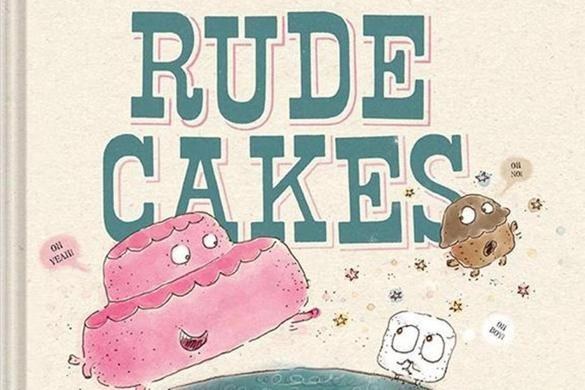
12. Rude Cakes by Rowboat Watkins
View this image › What It’s About: This book is about a cake, who is, very rude. He never says please or thank you, never listens, and doesn’t share well. One day a giant cyclops takes the rude cake and wears him as a hat. The cyclops has great manners, but the cake hates being a hat. After finally getting away from the cyclops, the cake becomes much more polite.
Why It’s Important: Although this book is quite out there, it teaches how far good manners and behavior can go toward getting what you want.

So, there you have it. 12 books, and doubtless there are many more. We can use them not only to teach young people, but also meditate on them ourselves. To kindness!


Tuesday, November 1, 2016

Vote for Wilberforces!


“What are you going to do about the election?” asked my friend.

“I’m going to pray for more people like William Wilberforce to be raised up,” I answered.

She looked at me blankly.

William Wilberforce was a member of Parliament in the late 1700’s and early 1800’s, and is best known for making slavery illegal in the British Empire. No small task, it took him decades to succeed, but he died knowing that his goal was reached. I read a bit about him in a book called Seven Men and the Secret of their Greatness, by Eric Metaxas. From it I learned two things that I didn’t know before.

1)    He did more than remove slavery, Wilberforce changed the culture. “He was the most influential social reformer that ever lived…” The book goes on to describe how he made it acceptable to give to the poor, to help others in distress- things we take for granted in western society now.
2)    Even though the king in power was, well, evil, (reportedly he had slept with thousands of women), that didn’t stop Wilberforce from making a difference in the culture. He didn’t complain about the wicked deeds of the king, he just overcame them with his goodness.

Hmmmmm- doesn’t that sound scriptural? Overcoming evil with good?

We can find Congressmen and Senators, both on the state and national level who aspire to change the culture. Statesmen whose ideas of helping the poor and those less fortunate are strong. Humble people who do not make agreeing with them a pre-requisite for working together. Strong and meek people who don’t grandstand and berate those who are wrong. Men and women who will fight in a gracious way, persuading those on the fence because of their graciousness. 

So pray for God to raise up more people like William Wilberforce. Our country needs us!